March 2, 2014
Installing Window 8
Sir Tom discussed how to install Windows 8 using power point... awesome right... hehehe, he only demonstate how. I learned that it was very easy but very long process to install the windows 8.

System Utilities
Sir Tom discussed the system utilites. He borrowed my USB because it has virus...
He discussed the ff:
He discussed the ff:
- disk scan/fragmentation
- system backup/restore
- start up manager
- live optimization
- registry and disk cleaner
- duplicate finder
It was a very long lecture but at least... I learn so much
Mother Board
Think I forgot when is it, but I never forgot our experience to assemble the mother board with my team... it's very fun and we learned so much even though there is the time limit... we had a mistake on the ribbon cable... its very cool band very frustrating.
Basic Computer Hardware and Power On Self Test Beeps
Sir Tom discussed to us the important matters to check when we use computer. I wrote some of it...
- check power
- check the cables
- check when others use printer
- check when printer install
Sir Tom also discussed the meanings of beeps of the used computer... I didn't take some notes because he said that it's not much important.
Then... we were assigned to plug all the wires and cables to the computer set to test our skill. I did it and after that, we messaged sir Tom that we made it. YEY!
Lecture about the Generations
Sir Tom discussed the different generations of computer. I was very amazed of it because of the structure and the functions of computers in such early times...
To help you with these... I summarize the lesson.
 1st Generation: Vacuum Tubes(1940-1955)
 2nd Generation: Transistors(1956-1963)

3rd Generation: Integrated Circuit (IC)... (eye see)

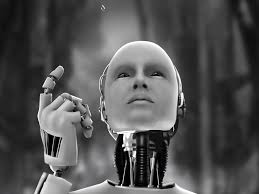 5th Generation: Artificial Inteligence(?-present)
To help you with these... I summarize the lesson.
 1st Generation: Vacuum Tubes(1940-1955)
- for circuiting and magnetic drums for memory
- the input to the computer was through puncehed cards and paper tubes
- software tech : machine language
2nd Generation: Transistors(1956-1963)- Magnetic Core Techonology
- assembly language
- much smaller than Vacuum Tubes
3rd Generation: Integrated Circuit (IC)... (eye see)
- multiple transistors
- placed on a silicon chip
- |
- -----> semiconductor
- gets much smaller than transistors
4th Generation: Microprocessor(1971-present)
- LSI Large Scale Integration
- Its much smaller than integrated circuit
- capable of learning and self-orientation
HOPE YOU LIKE IT!
February 26, 2014
Hardware Specs
Sir Tom discussed the Hardware Specification. According to sir Tom, Hardware Specification dictates the limits and maximum capability of a hardware/device depending that will be used. He also discussed the differences of a laptop and desktop with its functions and weaknesses.

.jpg)
February 24, 2014
Computer System
This flow chart helped me to understand more about the Computer System: Note I made this but the info is from Sir Tom :)


Computer System has also different types:
February 23, 2014
How does data travel across the network?
Sir Tom discussed the 2 ways for data to travel across the network:

- Data transmission- physical transfer of data over communication channel or medium such as copperwires, optical fibers, wireless channel.
.jpg)
- Data-represented as electromagnetic signals(electrical voltage, radiowave, microwave, or infrared signal)

.jpg)
Moving Information within computer
When you search the process of CPU, you find this:


Well, to help you... I made a simple way to understand it. Sir tom illustrated a flow chart like this...
February 22, 2014
Data Sources
Sir Tom discussed to us the different ways to get computer data. It is the "Original, Previously stored data, and Digitizing"

Software? What's that?
I made this to make all the readers understand the Software of computers... I don't own all the definitions...


Subscribe to:
Comments (Atom)